

Call us now
08045800138

 Send Inquiry
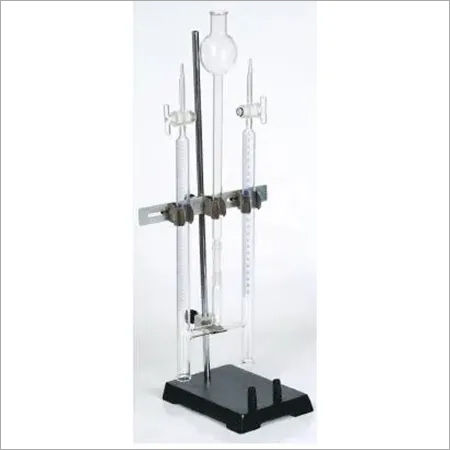
Science Laboratory Brownlee Electrolysis Apparatus
MOQ : 10 Pieces
Science Laboratory Brownlee Electrolysis Apparatus Specification
- Usage
- For Science Laboratory
- Product Type
- Brownlee Electrolysis Apparatus
- Material
- Glass Jar
- Size
- 112 x 125 MM
- Feature
- Long Working Life and High Strength
- Color
- Transparent and Yellow
Science Laboratory Brownlee Electrolysis Apparatus Trade Information
- Minimum Order Quantity
- 10 Pieces
- Payment Terms
- Cash in Advance (CID), Cash Advance (CA)
- Supply Ability
- 500 Pieces Per Day
- Delivery Time
- 1 Week
- Packaging Details
- Carton Box
- Main Export Market(s)
- Australia, South America, Western Europe, Middle East, Asia, Central America, Eastern Europe, North America, Africa
- Main Domestic Market
- All India
About Science Laboratory Brownlee Electrolysis Apparatus
Designed for simplicity and economy. Idealfor lecture table or student laboratory work.
Consists of nonconducting support equipped
with binding posts connected to 2 insulated
platinum electrodes, 2 inverted 150mm test
tubes, and a 112 x 125mm glass jar.
Built for Reliable Laboratory Performance
Crafted from durable glass, the Brownlee Electrolysis Apparatus is engineered to withstand regular laboratory use without compromising safety or clarity. The transparent and yellow design offers excellent visibility while maintaining structural integrity, allowing clear observation of experiments and results.
Versatile Applications in Science Education
Ideal for secondary and higher education laboratories, this apparatus is perfect for teaching and demonstrating the principles of electrolysis. Its design supports various experiments in chemistry and electrochemistry, making it a valuable tool for both educators and students.
FAQs of Science Laboratory Brownlee Electrolysis Apparatus:
Q: How is the Brownlee Electrolysis Apparatus used in a science laboratory?
A: The apparatus is used to demonstrate and investigate the electrolysis process by connecting it to a power source and using suitable electrodes and electrolyte solutions. Students can observe the electrochemical reactions that occur at the electrodes within the glass jar.Q: What materials are used in the construction of the Brownlee Electrolysis Apparatus?
A: This apparatus is constructed using a high-strength glass jar, ensuring both chemical resistance and durability during laboratory experiments.Q: When should I consider replacing the apparatus?
A: Given its long working life and robust construction, the apparatus typically requires replacement only if the glass jar is accidentally damaged or shows significant wear affecting its safety or function.Q: Where is the Brownlee Electrolysis Apparatus manufactured and exported from?
A: The apparatus is manufactured in India and is available for export to laboratories and educational institutions worldwide.Q: What is the process of performing electrolysis using this apparatus?
A: To perform electrolysis, fill the jar with an appropriate electrolyte solution, insert the electrodes, and connect them to a power source. Observe the reactions at each electrode to study the decomposition of the electrolyte.Q: What are the benefits of using this electrolysis apparatus in educational settings?
A: This apparatus offers long-term durability, high strength, and excellent visibility, making it ideal for repeated classroom demonstrations and experiments, thus enhancing students understanding of electrochemical principles.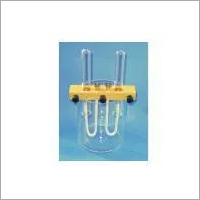
Tell us about your requirement

Price:
Quantity
Select Unit
- 50
- 100
- 200
- 250
- 500
- 1000+
Additional detail
Mobile number
Email

More Products in Electricity & Magnetism Category
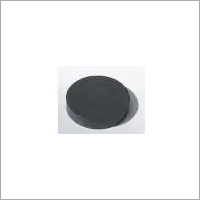
Magnet Circular Disc
Price Range 50.00 - 350.00 INR / Piece
Minimum Order Quantity : 10 Pieces
Color : Black
Material : Ceramic
Feature : Long Working Life and High Strength
Usage : For Laboratory and College Purpose
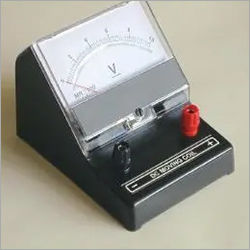
Meters Varoius
Price Range 500.00 - 5000.00 INR / Piece
Minimum Order Quantity : 10 Pieces
Color : Black and White
Material : Plastic
Feature : Long Working Life and High Strength
Usage : For Laboratory Purpose
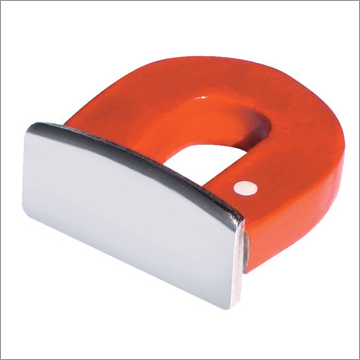
Magnets, Horse Shoe, Alnico
Price Range 50.00 - 350.00 INR / Piece
Minimum Order Quantity : 10 Pieces
Color : Red and White
Feature : Durable and High Functionality
Usage : For Laboratory and College Purpose
Hoffman Electrolysis Apparatus
Price Range 2000.00 - 5000.00 INR / Piece
Minimum Order Quantity : 10 Pieces
Color : Transparent and Black
Material : Glass and Metal
Feature : Reliable Performance and Long Service Life
Usage : For Laboratory and College Purpose

SADANA BROTHERS
SCI-LAB SOLUTION
SCI-LAB SOLUTION
Plot No- A-8/1, Naraina Ind. Area, Phase 1, New Delhi - 110028, India
Phone :08045800138
 Send Inquiry
 Send Inquiry
 Send SMS
SADANA BROTHERS
All Rights Reserved.(Terms of Use)
Developed and Managed by Infocom Network Private Limited.
Developed and Managed by Infocom Network Private Limited.

