

Call us now
08045800138

 Send Inquiry
Solenoid Flat
MOQ : 10 Pieces
Solenoid Flat Specification
- Usage
- For Investigate qualitatively and quantitatively
- Product Type
- Flat Solenoid
- Material
- Copper, Wood and Plastic
- Feature
- Durable and High Functionality
- Color
- Red and Black
Solenoid Flat Trade Information
- Minimum Order Quantity
- 10 Pieces
- Payment Terms
- Cash in Advance (CID), Cash Advance (CA)
- Supply Ability
- 500 Pieces Per Day
- Delivery Time
- 1 Week
- Packaging Details
- Carton Box
- Main Export Market(s)
- Australia, Eastern Europe, Middle East, South America, Western Europe, Asia, Central America, North America, Africa
- Main Domestic Market
- All India
About Solenoid Flat
To investigate qualitatively and quantitatively, the interaction betweenthe eld surrounding a current-carrying wire and that produced in
the at solenoid. It consists of approximately 258 turns
of enameled copper wire
wound on wood and plastic
former. Connections are
made via. 4mm socket
clips.
Highly Durable Construction
The Solenoid Flat is built with quality copper windings, sturdy wood backing, and resilient plastic components. This combination ensures long-lasting use and withstands frequent handling in laboratories or academic settings. The materials used are carefully selected for their strength and functionality, minimizing wear and tear even with repeated experiments.
Optimal for Educational and Scientific Use
Specially engineered for both qualitative and quantitative research, this solenoid flat enhances investigative learning. Its design makes it suitable for a wide range of experiments involving electricity and magnetism. By providing consistent and accurate results, it supports curriculum requirements and experimental needs in educational institutions.
FAQs of Solenoid Flat:
Q: How is the Solenoid Flat used in scientific investigations?
A: The Solenoid Flat is commonly employed to study electromagnetic phenomena and current flow. It can be used to analyze magnetic field patterns, calculate field strength, and verify electromagnetic theory through hands-on experiments in labs.Q: What makes the Solenoid Flat durable and reliable for repeated use?
A: Its construction using high-quality copper, wood, and plastic ensures resistance to thermal stress and physical wear. This robust build enables it to perform consistently over numerous experimental cycles without compromising accuracy.Q: When should you choose the Solenoid Flat over other coil designs?
A: The Solenoid Flat is ideal when you need precise, stable, and accessible magnetic fields for both qualitative demonstrations and quantitative data collection, especially in laboratory or academic settings.Q: Where is the Solenoid Flat manufactured and exported from?
A: This Solenoid Flat is manufactured and exported from India, adhering to comprehensive quality standards to meet the demands of global customers.Q: What is the typical process for setting up the Solenoid Flat in laboratory experiments?
A: To set up, connect the solenoid terminals to a power source, ensure correct positioning for field visualization, and use measurement instruments as required for qualitative or quantitative assessment.Q: What benefits does this Solenoid Flat provide for educational purposes?
A: It offers a reliable and observable way for students and researchers to explore fundamental principles in electromagnetism, enhancing understanding through practical, hands-on experience with accurate results.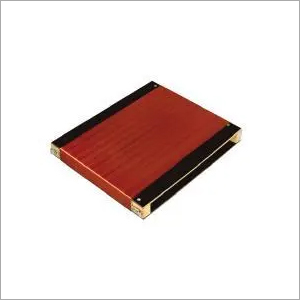
Tell us about your requirement

Price:
Quantity
Select Unit
- 50
- 100
- 200
- 250
- 500
- 1000+
Additional detail
Mobile number
Email

More Products in Electricity & Magnetism Category
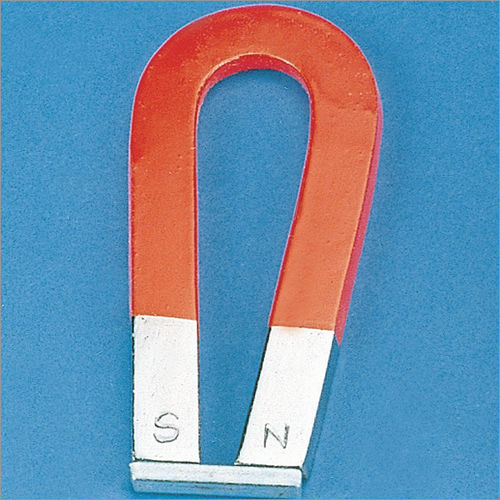
Stainless Steel Horseshoe Magnet
Price Range 50.00 - 300.00 INR / Piece
Minimum Order Quantity : 10 Pieces
Color : White and Red
Feature : Durable and High Functionality
Product Type : Horseshoe Steel Magnet
Material : Stainless Steel
Mounted on a Insulated Atand Electrostatic Conductor
Price Range 500.00 - 5000.00 INR / Piece
Minimum Order Quantity : 10 Pieces
Color : Silver and Black
Feature : Long Working Life and High Strength
Product Type : Electrostatic Conductor
Material : Metal
Electrodes With Binding Posts
Price Range 100.00 - 1000.00 INR / Piece
Minimum Order Quantity : 10 Pieces
Color : Red and White
Feature : Long Working Life and High Strength
Product Type : Electrodes Flat
Material : Aluminium, Carbon, Copper and Zinc
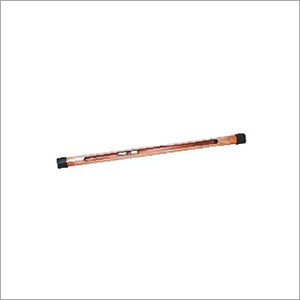
Lenz Law Apparatus
Price Range 60.00 - 500.00 INR / Piece
Minimum Order Quantity : 10 Poles
Color : Copper and Black
Feature : Durable and High Functionality
Product Type : Lenz Copper Tube
Material : Copper

SADANA BROTHERS
SCI-LAB SOLUTION
SCI-LAB SOLUTION
Plot No- A-8/1, Naraina Ind. Area, Phase 1, New Delhi - 110028, India
Phone :08045800138
 Send Inquiry
 Send Inquiry
 Send SMS
SADANA BROTHERS
All Rights Reserved.(Terms of Use)
Developed and Managed by Infocom Network Private Limited.
Developed and Managed by Infocom Network Private Limited.

