

Call us now
08045800138

 Send Inquiry
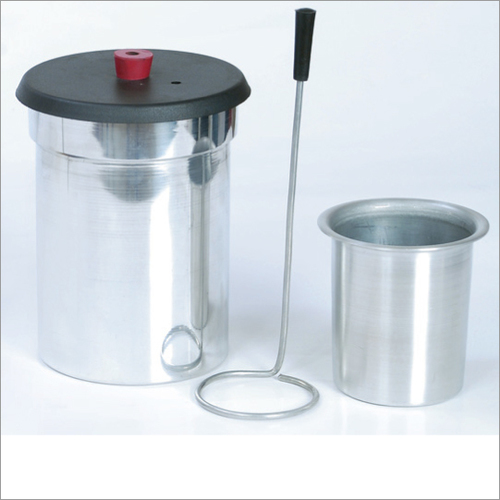
Joules Calorimeter (Economy Model)
MOQ : 10 Pieces
Joules Calorimeter (Economy Model) Specification
- Usage
- For Laboratory Purpose
- Voltage
- 3-4 Volt (v)
- Product Type
- Joules Calorimeter
- Material
- Copper and Aluminum
- Size
- 100x60 MM
- Feature
- Durable and High Functionality
- Color
- Silver
Joules Calorimeter (Economy Model) Trade Information
- Minimum Order Quantity
- 10 Pieces
- Payment Terms
- Cash in Advance (CID), Cash Advance (CA)
- Supply Ability
- 500 Pieces Per Day
- Delivery Time
- 1 Week
- Packaging Details
- Carton Box
- Main Export Market(s)
- North America, Middle East, Central America, Eastern Europe, South America, Western Europe, Asia, Australia, Africa
- Main Domestic Market
- All India
About Joules Calorimeter (Economy Model)
Inner copper vessel 75x50mm, tted with arecessed plastic lid, with hole for a thermometer
and carrying a heating coil. Connection to the 3-4V
DC power supply is via 4mm socket terminals. The
outer aluminum vessel is 100x60mm. With stirrer.
Supplied without the thermometer.
Reliable Laboratory Equipment for Heat Experiments
Our Joules Calorimeter (Economy Model) offers an economical yet robust solution for measuring heat changes in laboratory settings. Built with premium copper and aluminum, it ensures efficient thermal conductivity and extended longevity. Designed to perform consistently under voltages of 3-4 volts, this calorimeter is a preferred choice for educators, researchers, and quality labs seeking accuracy within a budget-friendly package.
Durability Meets Functionality
Engineered with a silver-toned copper and aluminum body, this calorimeter stands out for its resilience and dependable operation. Its size (100x60 mm) makes it easy to handle and ideal for repetitive experimental setups. Suitable for a variety of laboratory applications, this device is manufactured to conform to high standards, ensuring consistent, high-quality results.
FAQs of Joules Calorimeter (Economy Model):
Q: How is the Joules Calorimeter (Economy Model) used in laboratory experiments?
A: The calorimeter is employed to measure the heat produced by electric current, verifying the relationship defined by Joules law. Users connect the calorimeter to a 3-4 volt power source, input known quantities of current, and monitor the temperature change in the contained liquid.Q: What materials are used in this calorimeter and why?
A: The economy model is constructed from copper and aluminum. Copper is chosen for its excellent thermal conductivity, while aluminum adds durability and keeps the device lightweight, ensuring precise and consistent measurements over time.Q: When should this calorimeter be used during laboratory research?
A: This calorimeter is typically used when experiments require precise measurement of heat transfer due to electric currents, especially in educational settings or basic research involving Joules law and calorimetry.Q: Where can this calorimeter be sourced?
A: The Joules Calorimeter (Economy Model) is manufactured and supplied by exporters based in India. It can be obtained directly from laboratory equipment suppliers or authorized representatives.Q: What is the standard process for conducting an experiment with this calorimeter?
A: The experiment involves filling the calorimeter with a known liquid, immersing a heating coil, and connecting it to a 3-4 V power supply. The increase in temperature is measured over a set period to determine the amount of energy transferred as heat.Q: What are the key benefits of using this calorimeter model?
A: The main benefits include its cost-effectiveness, reliable construction, high accuracy, and suitability for repeated use. Its size and materials also make it easy to set up and maintain, supporting effective laboratory learning and research.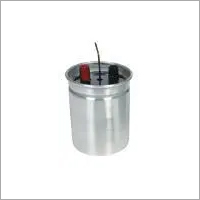
Tell us about your requirement

Price:
Quantity
Select Unit
- 50
- 100
- 200
- 250
- 500
- 1000+
Additional detail
Mobile number
Email

More Products in Heat Transfer Lab Equipment Category
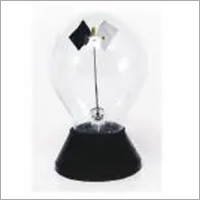
Laboratory Crookes Radiometer
Price Range 270.00 - 1200.00 INR / Piece
Minimum Order Quantity : 10 Pieces
Feature : Durable and High Functionality
Product Type : Crookes Radiometer
Color : Black and Transparent
Material : Glass and Metal
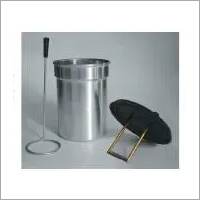
Electric Calorimeter (Calorimeter, Joule)
Price Range 600.00 - 3500.00 INR / Piece
Minimum Order Quantity : 10 Pieces
Feature : Long Working Life and High Strength
Product Type : Electric Calorimeter
Color : Silver and Black
Material : Steel
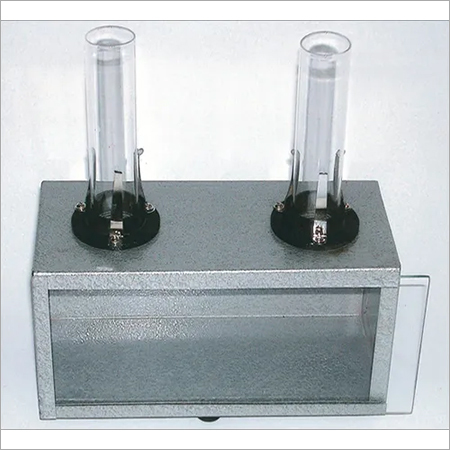
Gas Convection Apparatus (Ventilation Apparatus, Convection Box)
Price Range 1000.00 - 5000.00 INR / Piece
Minimum Order Quantity : 10 Pieces
Feature : Durable and High Functionality
Product Type : Gas Convection Apparatus
Color : Grey, Black and White
Material : Metal and Glass
Calorimeter, Set Of Two
Price Range 2000.00 - 5000.00 INR / Set
Minimum Order Quantity : 10 Sets
Feature : Long Working Life and High Strength
Product Type : Electric Calorimeter
Color : Black and Silver
Material : Steel

SADANA BROTHERS
SCI-LAB SOLUTION
SCI-LAB SOLUTION
Plot No- A-8/1, Naraina Ind. Area, Phase 1, New Delhi - 110028, India
Phone :08045800138
 Send Inquiry
 Send Inquiry
 Send SMS
SADANA BROTHERS
All Rights Reserved.(Terms of Use)
Developed and Managed by Infocom Network Private Limited.
Developed and Managed by Infocom Network Private Limited.

