

Call us now
08045800138

 Send Inquiry
Van De Graff Generator Hand Driven
MOQ : 10 Pieces
Van De Graff Generator Hand Driven Specification
- Usage
- For Laboratory and College Purpose
- Product Type
- Hand Driven Van De Graff Generator
- Material
- Steel
- Size
- Diameter 220 M
- Feature
- Long Working Life and High Strength
- Color
- Silver and Red
Van De Graff Generator Hand Driven Trade Information
- Minimum Order Quantity
- 10 Pieces
- Payment Terms
- Cash in Advance (CID), Cash Advance (CA)
- Supply Ability
- 500 Pieces Per Day
- Delivery Time
- 1 Week
- Packaging Details
- Carton Box
- Main Export Market(s)
- Australia, South America, Western Europe, Middle East, Central America, Asia, Eastern Europe, North America, Africa
- Main Domestic Market
- All India
About Van De Graff Generator Hand Driven
The generator is provided with a conductor sphere with diameterof 220 mm. The sphere is equipped with a 4 mm socket (for
connection to other equipment through a wire with
Banana plug). With discharging sphere.
Engineered for Education
This Van De Graff Generator is purpose-built for academic settings, offering a practical way to demonstrate electrostatic principles in laboratories and colleges. Its size and robust materials ensure consistent performance during repeated usage, making it indispensable for science education.
Exceptional Workmanship and Durability
Constructed from high-strength steel, the generator boasts a long working life. Its silver and red finish adds visual appeal, while precision engineering guarantees reliable operation, session after session.
FAQs of Van De Graff Generator Hand Driven:
Q: How does the hand driven Van De Graff Generator operate in a laboratory setting?
A: The generator is manually operated by turning a handle, which moves a belt system inside. This process generates and accumulates static electrical charge on the large spherical terminal, allowing students to observe electrostatic phenomena at a safe and controlled voltage.Q: What educational benefits does this generator provide for college and laboratory use?
A: It offers hands-on experience with electrostatics, allowing students to visualize charge accumulation, spark discharges, and other effects. This interactive approach enhances conceptual understanding and makes physics education more engaging.Q: When is this generator typically used during experiments?
A: Its commonly utilized during physics lessons, electrostatics demonstrations, or practical exams in educational institutions, serving as a core apparatus for hands-on experiments relating to static electricity.Q: Where can this Van De Graff Generator be installed safely?
A: It should be placed on a stable, non-conductive surface in a laboratory or classroom environment, away from flammable materials and moisture, ensuring safe and effective demonstrations.Q: What is the process for maintaining the generator to ensure a long working life?
A: Routine maintenance includes keeping the generator clean and dry, periodically checking the belt and moving parts for wear, and ensuring all components are securely assembled. This helps maintain optimal performance and extends the generators lifespan.Q: Why is the steel construction advantageous for this generator?
A: Steel provides excellent durability, strength, and resistance to wear and corrosion. This robust material ensures the generator withstands frequent handling and delivers reliable performance over many years.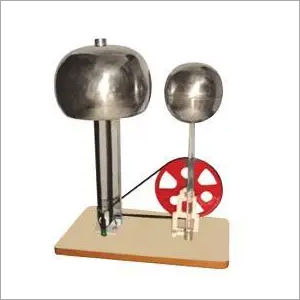
Tell us about your requirement

Price:
Quantity
Select Unit
- 50
- 100
- 200
- 250
- 500
- 1000+
Additional detail
Mobile number
Email

More Products in Electricity & Magnetism Category
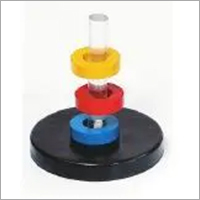
Magnetic Rings Set
Price Range 431.00 - 2500.00 INR / Piece
Minimum Order Quantity : 10 Pieces
Usage : For Laboratory and College Purpose
Feature : For Laboratory and College Purpose
Product Type : Magnet Set
Color : Black, Yellow, Red and Blue
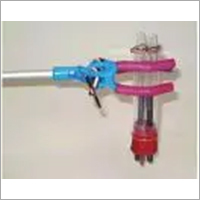
Electrolysis Cell For Science Laboratory
Price Range 150.00 - 1500.00 INR / Piece
Minimum Order Quantity : 10 Pieces
Usage : For Science Laboratory
Feature : Durable and High Functionality
Product Type : Electrolysis Cell
Color : Pink, Red, Blue and White
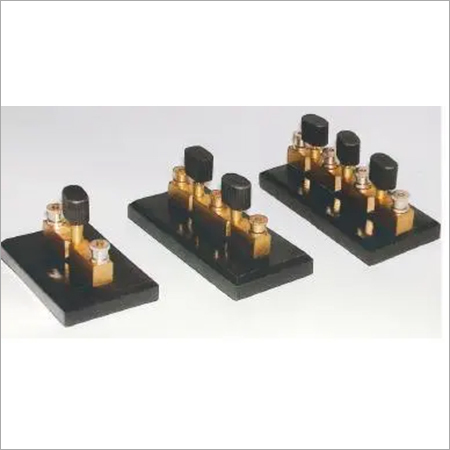
Plug Keys For Laboratory
Price Range 50.00 - 500.00 INR / Piece
Minimum Order Quantity : 10 Pieces
Usage : For Laboratory and College Purpose
Feature : Long Working Life and High Strength
Product Type : Plug Keys
Color : Black and Golden
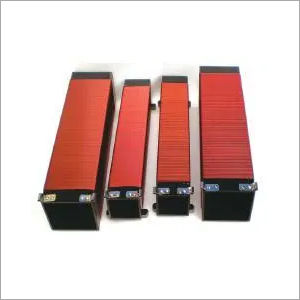
Solenoid Set Of Four
Price Range 1000.00 - 4500.00 INR / Set
Minimum Order Quantity : 50 Sets
Usage : For Laboratory Purpose
Feature : Long Working Life and High Strength
Product Type : Set of 4 Solenoid
Color : Black and Red

SADANA BROTHERS
SCI-LAB SOLUTION
SCI-LAB SOLUTION
Plot No- A-8/1, Naraina Ind. Area, Phase 1, New Delhi - 110028, India
Phone :08045800138
 Send Inquiry
 Send Inquiry
 Send SMS
SADANA BROTHERS
All Rights Reserved.(Terms of Use)
Developed and Managed by Infocom Network Private Limited.
Developed and Managed by Infocom Network Private Limited.

