

Call us now
08045800138

 Send Inquiry
Electrodes With Binding Posts
MOQ : 10 Pieces
Electrodes With Binding Posts Specification
- Usage
- For Laboratory and College Purpose
- Product Type
- Electrodes Flat
- Material
- Aluminium, Carbon, Copper and Zinc
- Size
- 125 x 50 MM
- Feature
- Long Working Life and High Strength
- Color
- Red and White
Electrodes With Binding Posts Trade Information
- Minimum Order Quantity
- 10 Pieces
- Payment Terms
- Cash in Advance (CID), Cash Advance (CA)
- Supply Ability
- 500 Pieces Per Day
- Delivery Time
- 1 Week
- Packaging Details
- Carton Box
- Main Export Market(s)
- Western Europe, Middle East, Eastern Europe, South America, Asia, Central America, North America, Australia, Africa
- Main Domestic Market
- All India
About Electrodes With Binding Posts
Electrodes With Binding Posts
Size (I x w), 125 x 50mm with 4mm socket binding post terminal.
| Material | Cat. No. |
| Aluminium | 3151-21 |
| Carbon | 3151-22 |
| Copper | 3151-23 |
| Iron | 3151-24 |
| Lead | 3151-25 |
| Zinc | 3151-26 |
Durable and Versatile Laboratory Electrodes
Engineered for repeated use in educational and laboratory environments, our electrodes with binding posts combine durable materials with robust design. Their long working life and high-strength build make them ideal for demonstrations, experiments, and research applications. By using premium aluminium, carbon, copper, and zinc, we ensure consistent performance and reliability.
Designed for Ease of Use and Clarity
With a practical size of 125 x 50 mm and distinct red and white color options, these electrodes are easy to handle and identify during experiments. The binding post system allows for quick and secure connections, streamlining your laboratory work and reducing setup times, thus supporting efficient scientific investigation.
FAQs of Electrodes With Binding Posts:
Q: How are the electrodes with binding posts used in laboratory and college experiments?
A: These electrodes are utilized to facilitate electrical conductivity in various scientific and educational experiments. Their binding posts allow for easy connection to circuits or measurement devices, providing a stable and secure interface for accurate demonstrations and research activities.Q: What materials are the electrodes made from and why are they chosen?
A: Our electrodes are made from aluminium, carbon, copper, and zinc. These materials are selected for their excellent conductive properties, durability, and suitability for a wide range of laboratory applications, ensuring reliable performance and extended service life.Q: When should I use these electrodes with binding posts in laboratory settings?
A: These electrodes are ideal for use during physics, chemistry, and electrical demonstrations or experiments that require robust and stable connections. They are commonly employed in educational institutions and research laboratories for routine and advanced scientific tasks.Q: Where are these electrodes manufactured and exported from?
A: The electrodes are manufactured and exported from India by a reputable producer known for quality laboratory equipment. We serve clients globally, catering especially to institutions in need of reliable experimental tools.Q: What is the process for connecting these electrodes in an experimental setup?
A: To use the electrodes, simply attach the desired wires or leads to the binding posts. This secure connection enables smooth current flow and accurate results during measurements or experiments, enhancing both ease and efficiency.Q: What benefits do these electrodes offer over standard electrode options?
A: They provide high strength, a long working life, and superior conductivity due to their premium material composition. Their identifiable red and white colors also aid in proper circuit configuration and reduce setup errors during experimentation.Q: Can these electrodes be easily identified and reused for multiple experiments?
A: Yes, the color-coded (red and white) design makes identification straightforward, while the robust materials ensure they can be reused for multiple sessions without loss of performance.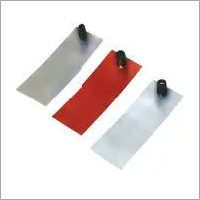
Tell us about your requirement

Price:
Quantity
Select Unit
- 50
- 100
- 200
- 250
- 500
- 1000+
Additional detail
Mobile number
Email

More Products in Electricity & Magnetism Category

Flask Type Electroscope
Price Range 50.00 - 450.00 INR / Piece
Minimum Order Quantity : 10 Pieces
Product Type : Electroscope
Color : Transparent and Red
Usage : For Experiments in Detection of Electric charge and Determination of Polarity
Material : Rubber, Aluminium and Glass

Soft Iron Rod
Price Range 50.00 - 350.00 INR / Piece
Minimum Order Quantity : 10 Pieces
Product Type : Soft Rod
Color : Silver
Usage : For Uses Involving changing magnetic flux in electromagnets
Material : Iron
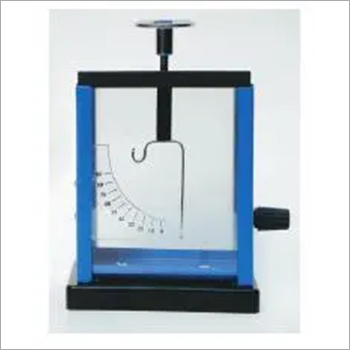
Metal Case Electroscope
Price Range 180.00 - 900.00 INR / Piece
Minimum Order Quantity : 10 Pieces
Product Type : Case Electroscope
Color : Black and Blue
Usage : For Laboratory and College Purpose
Material : Aluminium and Glass
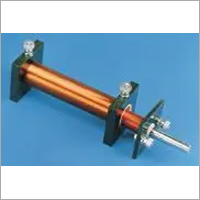
Induction Primary And Secondary Coil Set
Price Range 750.00 - 4500.00 INR / Piece
Minimum Order Quantity : 10 Pieces
Product Type : Coil Set
Color : Copper, Black and Silver
Usage : For studying electromagnetic induction, ferromagnetizm and principles of a transformer.
Material : Plastic and Metal

SADANA BROTHERS
SCI-LAB SOLUTION
SCI-LAB SOLUTION
Plot No- A-8/1, Naraina Ind. Area, Phase 1, New Delhi - 110028, India
Phone :08045800138
 Send Inquiry
 Send Inquiry
 Send SMS
SADANA BROTHERS
All Rights Reserved.(Terms of Use)
Developed and Managed by Infocom Network Private Limited.
Developed and Managed by Infocom Network Private Limited.

