
Call us now
08045800138

 Send Inquiry
Laboratory Crookes Radiometer
MOQ : 10 Pieces
Laboratory Crookes Radiometer Specification
- Usage
- For Laboratory Purpose
- Product Type
- Crookes Radiometer
- Material
- Glass and Metal
- Size
- Dia 70-80 MM
- Feature
- Durable and High Functionality
- Color
- Black and Transparent
Laboratory Crookes Radiometer Trade Information
- Minimum Order Quantity
- 10 Pieces
- Payment Terms
- Cash in Advance (CID), Cash Advance (CA)
- Supply Ability
- 500 Pieces Per Day
- Delivery Time
- 1 Week
- Packaging Details
- Carton Box
- Main Export Market(s)
- Western Europe, Australia, Eastern Europe, Middle East, Central America, South America, Asia, North America, Africa
- Main Domestic Market
- All India
About Laboratory Crookes Radiometer
Excellent demonstration tool of the effectsof heat and the conversion of solar power to
mechanical power. Consists of a set of vanes
each shiny on one side to reect the light
and blackened on the other to collect the
energy. It is mounted in an evacuated glass
bulb. When exposed to the sun or source of
intense light it causes the vanes to spin.
Robust Construction for Laboratory Use
Crafted from premium glass and metal, the Laboratory Crookes Radiometer is built to offer longevity and resilience even with frequent handling. The well-sealed structure ensures consistent performance under laboratory conditions, while the transparent outer body allows for clear observation during experiments.
Optimal Functionality and Educational Benefit
This radiometer stands out due to its high functionality and durable nature, making it an excellent tool for teaching and demonstrating the conversion of light energy to movement. Suitable for a variety of physics experiments, it aids learners and educators in understanding essential scientific principles effectively.
FAQs of Laboratory Crookes Radiometer:
Q: How does the Laboratory Crookes Radiometer function?
A: The radiometer operates when exposed to light. The black and silver vanes inside respond to light energy, causing them to spin due to the heat differential, thereby demonstrating the conversion of light energy into mechanical motion.Q: What are the main materials used in the construction of this radiometer?
A: It is made from high-quality glass and metal, ensuring clarity, durability, and long-lasting performance in laboratory environments.Q: When should this radiometer be used in a laboratory setting?
A: This device is ideal for physics classes, science demonstrations, and experiments that aim to illustrate energy conversion, making it suitable for use during lessons on thermodynamics and kinetic theory.Q: Where is this Crookes Radiometer manufactured and exported from?
A: The radiometer is both manufactured and exported from India, ensuring it meets quality standards suitable for global laboratory supplies.Q: What is the process behind the spinning of the vanes?
A: When light enters the transparent glass bulb, it heats the black vanes more than the silver sides, causing air molecules to impart momentum, which results in the visible spinning motion.Q: How should the radiometer be used for best results?
A: Place the radiometer under a light source such as sunlight or a strong lamp in a stable laboratory setting. Observe the vanes as they spin, and use the device to spark discussions or conduct experiments related to light energy.Q: What are the key benefits of using this radiometer in laboratories?
A: The radiometer provides a clear and engaging way to demonstrate the transformation of light energy into motion, fostering a deeper understanding of energy principles for students and researchers.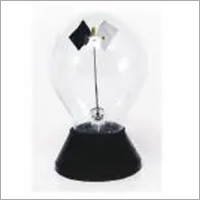
Tell us about your requirement

Price:
Quantity
Select Unit
- 50
- 100
- 200
- 250
- 500
- 1000+
Additional detail
Mobile number
Email

More Products in Heat Transfer Lab Equipment Category
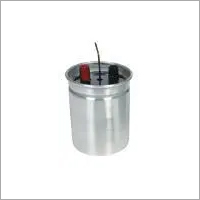
Joules Calorimeter (Economy Model)
Price Range 700.00 - 4500.00 INR / Piece
Minimum Order Quantity : 10 Pieces
Color : Silver
Feature : Durable and High Functionality
Product Type : Joules Calorimeter
Usage : For Laboratory Purpose
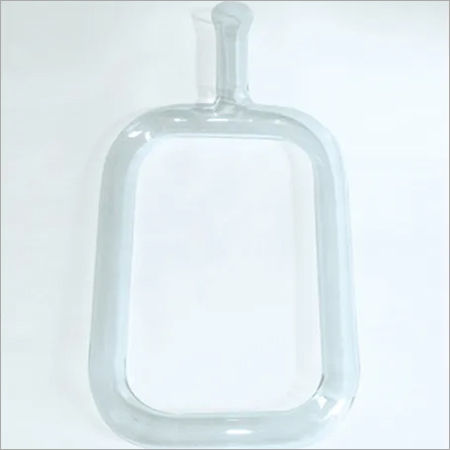
Laboratory Liquid Convection Apparatus
Price Range 716.00 - 2500.00 INR / Piece
Minimum Order Quantity : as per requirement Piece
Color : White
Feature : High Performance and Better Efficiency
Product Type : Liquid Convection Apparatus
Usage : For Laboratory
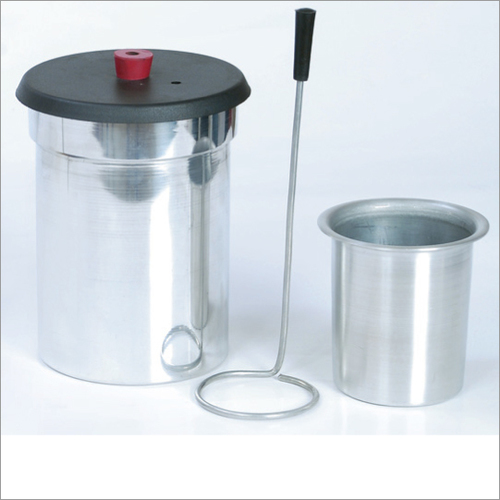
Calorimeter, Set Of Two
Price Range 2000.00 - 5000.00 INR / Set
Minimum Order Quantity : 10 Sets
Color : Black and Silver
Feature : Long Working Life and High Strength
Product Type : Electric Calorimeter
Copper Calorimeter For Laboratory
Price Range 700.00 - 3500.00 INR / Piece
Minimum Order Quantity : 10 Pieces
Color : Copper Colour
Feature : Durable and High Functionality
Product Type : Calorimeter
Usage : For Laboratory

SADANA BROTHERS
SCI-LAB SOLUTION
SCI-LAB SOLUTION
Plot No- A-8/1, Naraina Ind. Area, Phase 1, New Delhi - 110028, India
Phone :08045800138
 Send Inquiry
 Send Inquiry
 Send SMS
SADANA BROTHERS
All Rights Reserved.(Terms of Use)
Developed and Managed by Infocom Network Private Limited.
Developed and Managed by Infocom Network Private Limited.

