

Call us now
08045800138

 Send Inquiry
St. Louis Motor
St. Louis Motor Specification
- Voltage
- 12V
- Power Consumption
- Low power consumption
- Power Supply
- Electric
- Usage
- Educational and laboratory applications
- Product Type
- Motor
- Material
- Metal and plastic
- Size
- Small
- Style
- Functional
- Weight
- Lightweight
- Feature
- Compact design; Laboratory-use motor
- Color
- Black with red accents
About St. Louis Motor
For studying the functionsof the basic parts of electric
motors and demonstrating
how electrical energy is
converted into mechanical
energy.
Comprised of a 2-pole D.C.
armature with coils and
mounted in an aluminium
bracket with two binding
posts and 4mm socket binding post terminals. The armature is held
on brass cone bearings and a shaft tted with split commutator.
Complete with two permanent magnets in adjustable holders
mounted on bakelite base (I x w), about 173 x 97mm. Works on 6V
D.C. power source.
Versatile Laboratory Motor
Specifically designed for laboratory and educational contexts, the St. Louis Motor delivers consistent performance across a range of demonstrations and experiments. Its adaptable design ensures suitability for both instructional and practical research purposes.
Efficient and Durable Construction
This motor is constructed from high-quality metal and plastic components, resulting in a durable unit that withstands regular laboratory use. Its low power consumption means it runs economically while maintaining reliable operation.
FAQs of St. Louis Motor:
Q: How is the St. Louis Motor powered in laboratory settings?
A: The St. Louis Motor operates on an electric power supply, specifically requiring a 12V source, which makes it suitable for various laboratory and educational setups.Q: What materials are used in the construction of this laboratory motor?
A: This motor is built from a combination of metal and plastic, offering durability and resistance to wear, while maintaining a lightweight profile for easy handling.Q: When should I use the St. Louis Motor in educational or scientific applications?
A: This motor is ideal for use during classroom demonstrations, experimental setups, or research projects where a compact, low-power, and reliable motor is necessary.Q: Where is the St. Louis Motor manufactured and exported from?
A: The St. Louis Motor is manufactured and exported from India, ensuring accessibility to educational institutions and laboratories worldwide.Q: What is the process for integrating the St. Louis Motor into an experiment?
A: To integrate the motor, simply connect it to a compatible 12V power supply using appropriate leads, secure it within your apparatus, and follow standard laboratory safety protocols.Q: How does the compact design benefit users in laboratory environments?
A: Its compact and lightweight design allows for effortless transportation, easy storage, and straightforward installation within small-scale experimental setups, enhancing versatility and convenience.Q: What advantages does the St. Louis Motor offer due to its low power consumption?
A: With its low power consumption, the motor reduces energy costs, prolongs the lifetime of power sources, and contributes to safer, more efficient laboratory operations.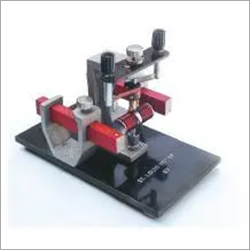
Tell us about your requirement

Price:
Quantity
Select Unit
- 50
- 100
- 200
- 250
- 500
- 1000+
Additional detail
Mobile number
Email

More Products in Electricity & Magnetism Category
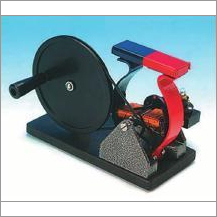
Lab Dynamo AC DC
Price Range 240.00 - 1800.00 INR / Piece
Minimum Order Quantity : 10 Pieces
Color : Red, Blue and Black
Feature : Long Working Life and High Strength
Product Type : AC DC Dynamo
Ceramic Bar Magnet
Price Range 50.00 - 300.00 INR / Piece
Minimum Order Quantity : 10 Pieces
Color : Blue
Feature : High Performance and Great Strength
Product Type : Bar Magnet
Usage : For Laboratory and College Purpose
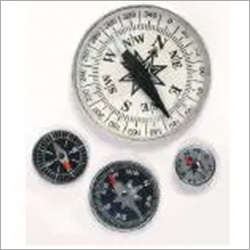
Digital Laboratory Magnetic Compass
Price Range 55.00 - 480.00 INR / Piece
Minimum Order Quantity : 10 Pieces
Color : Black and White
Feature : Long Working Life and High Strength
Product Type : Magnetic Compass
Usage : For Tracing the Magnetic Fields of Bar Magnets
Lamp Holder
Price Range 50.00 - 250.00 INR / Piece
Minimum Order Quantity : 10 Pieces
Color : Silver
Feature : Durable and High Functionality
Product Type : Lamp Holder Economy Switch
Usage : For Laboratory and College Purpose

SADANA BROTHERS
SCI-LAB SOLUTION
SCI-LAB SOLUTION
Plot No- A-8/1, Naraina Ind. Area, Phase 1, New Delhi - 110028, India
Phone :08045800138
 Send Inquiry
 Send Inquiry
 Send SMS
SADANA BROTHERS
All Rights Reserved.(Terms of Use)
Developed and Managed by Infocom Network Private Limited.
Developed and Managed by Infocom Network Private Limited.

